Route 6
On the RoadRoute 6 enters the narrative as both a road and a plan: the long red line Sal Paradise hopes will carry him west in 1947. Its failed beginning exposes the distance between a map’s clean promise and the improvisation of travel, while later crossings and recollections make roads and highways part of the novel’s changing geography of motion, memory, and home.
The Red Line and the First Attempt
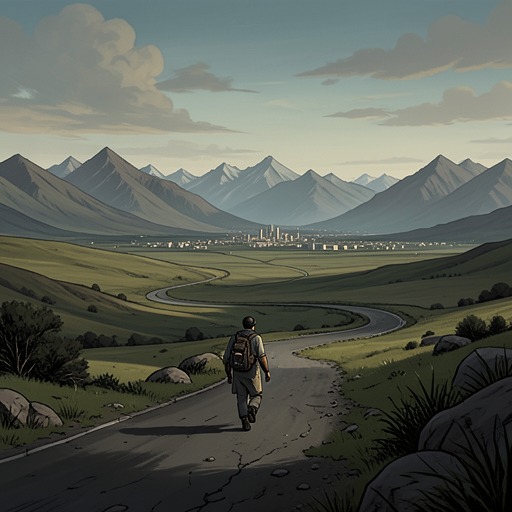
Sal has spent months studying maps in Paterson and reading about the pioneers. Route 6, stretching from Cape Cod to Ely, Nevada, where it bends south toward Los Angeles, seems to offer a single, coherent passage across the country. He decides to follow it all the way to Ely, imagining the cities and destinations that lie ahead. To reach the road, however, he first has to travel north toward Bear Mountain, the opposite of the westward movement he longs to begin.
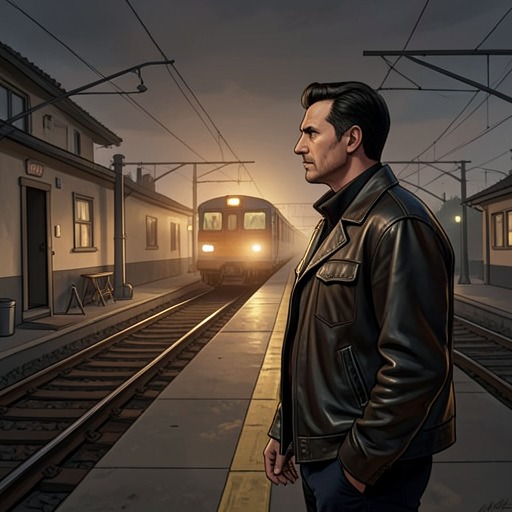
After taking the subway to the end of the line, then trolleys through Yonkers and five separate rides, Sal reaches the Route 6 junction in heavy rain. The road curves away into wilderness; there is no traffic or shelter. He takes cover beneath pines, then runs to an abandoned filling station, frightened and furious at having stranded himself on his opening day. The route’s map-like simplicity has given way to a cold, wet roadside with no useful traffic.
Abandoning the Map’s Plan
A driver and two women give Sal a lift north to Newburgh. The man tells him that traffic does not pass along this stretch of Route 6 and recommends returning to New York, crossing through the Holland Tunnel, and heading toward Pittsburgh to reach Chicago. Sal recognizes that the failure lies not just in the road but in his own plan: he had expected the pleasure of following one great red line instead of adapting to the available roads. After returning to New York by bus, he takes a bus to Chicago, spending most of his remaining money to avoid losing another day.
The next afternoon, Sal resumes westward travel from Joliet, Illinois, by hitchhiking. A dynamite truck carries him about thirty miles through Illinois on the road he had originally set out to follow. It intersects Route 66, and the two highways continue westward together. A woman then offers Sal a ride toward Iowa; he drives her car through Illinois to Davenport, leaving Route 6 behind as his journey proceeds by rides and changing routes rather than by fidelity to the map.
A Route Within a Larger Road Narrative
Route 6’s importance is concentrated in this first attempt, but its red line anticipates the book’s repeated crossings of the continent by bus, hitchhiking, and automobile. Later journeys use other roads and pass through landscapes that acquire meaning through movement: the highways are not interchangeable with the neat route Sal first imagined. They demand detours, shared rides, changing drivers, and exposure to weather, fatigue, and danger.
The distinction is particularly sharp in later drives. During the furniture run with Dean Moriarty, the party travels north from Virginia in a newly bought Hudson whose heater and radio fail; Dean keeps wiping fog and ice from the windshield while driving fast. On another crossing, Dean covers 1,180 miles from Denver to Chicago in seventeen hours of driving time, with the journey punctuated by a ditch, a ranch stop, and a police delay in Iowa. These episodes show how the mobility promised by roads depends on particular vehicles, companions, money, and risk—not on a line drawn in advance.
Memory, Scale, and the Meaning of Travel
The novel also returns to places first encountered on the 1947 trip. Years later, Sal passes Newton and Davenport again, then sees Rock Island and the Mississippi River as Dean drives east. The familiar Midwestern places connect separate road journeys, while the changed direction makes the earlier westward crossing part of a larger pattern of departures and returns. Route 6 belongs to that geography of memory even when the later journeys take other roads.
The episode gives the road a double meaning. On the map, Route 6 offers an orderly, continuous passage; on the ground, rain, absent traffic, and a driver’s advice overturn Sal’s expectation. The road does not deliver freedom by itself. Its significance lies in the gap between the imagined journey and the contingent movement that follows, a gap that shapes the novel’s recurring portrayal of travel as both an expansive promise and a practical struggle.